Why You Should Not Keep All Your Money in a Savings Account
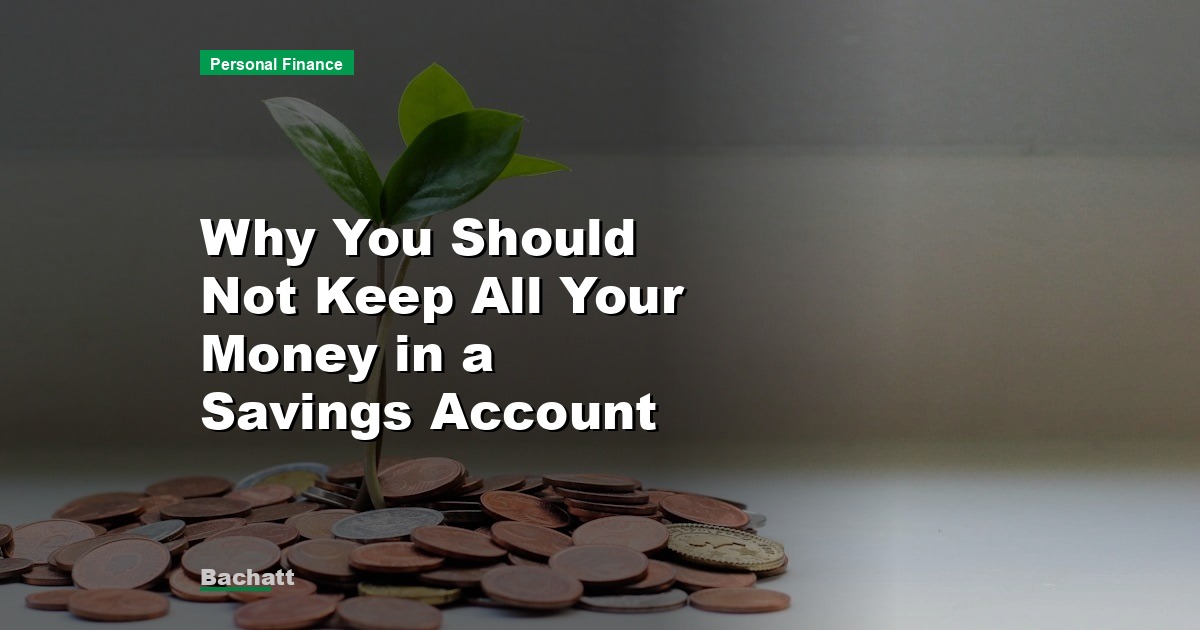

If you are like most Indians, a significant portion of your money sits in a savings account. It feels safe, accessible, and familiar. But here is what most people do not realise: keeping all your money in a savings account is actually making you poorer every year.
The Math That Should Worry You
Most savings accounts pay 2.5% to 3.5% interest per year. Some banks like AU Small Finance Bank or Kotak offer up to 7% on certain balances, but the big banks — SBI, HDFC, ICICI — hover around 2.7-3%.
Now consider inflation, which in India averages 5-6% per year. If your money earns 3% but inflation is 6%, your purchasing power is shrinking by 3% every year.
In practical terms: ₹1 lakh sitting in a savings account today will have the purchasing power of about ₹74,000 in 10 years. You have not lost any money on paper, but you can buy significantly less with it. This is called the invisible tax of inflation.
Why Self-Employed Indians Fall Into This Trap
Self-employed individuals — traders, freelancers, small business owners, consultants — often keep large amounts in their savings accounts for several reasons:
- Irregular income: You never know when the next payment will come, so you keep a large buffer.
- Business expenses: You need quick access to cash for stock purchases, rent, salaries, or emergencies.
- Mistrust of markets: Stories of stock market crashes and mutual fund losses make savings accounts feel safer.
- Lack of time: Running a business is exhausting. Who has time to research investment options?
These are valid concerns. But the solution is not to keep everything in a savings account — it is to organise your money into different buckets.
The Three-Bucket Strategy
Bucket 1: Immediate Needs (Savings Account)
Keep only 1-2 months of expenses in your savings account. This is your operating cash for rent, bills, groceries, and daily business expenses.
Bucket 2: Emergency Fund (Liquid Fund or Short-Term FD)
Keep 3-6 months of expenses in a liquid mutual fund or a sweep-in fixed deposit. These instruments offer:
- Returns of 5-7% (compared to 3% in savings)
- Easy withdrawal — most liquid funds credit money within 24 hours, and some offer instant redemption up to ₹50,000
- Higher safety — liquid funds invest in very short-term government and corporate securities
Bucket 3: Growth Fund (Mutual Funds, PPF, NPS, Gold)
Everything beyond your immediate and emergency needs should be invested for growth. Depending on your goals and timeline:
- Equity mutual funds: 10-14% historical returns over 10+ year periods
- PPF: 7.1% guaranteed, tax-free returns
- NPS: 8-12% returns with extra tax benefits
- Fixed deposits: 6-7.5% for those who want guaranteed returns
- Sovereign Gold Bonds: Gold price appreciation plus 2.5% annual interest
Real Example: The Cost of Inaction
Let us say Ramesh, a self-employed electrician, has ₹5 lakh sitting in his savings account beyond what he needs for daily expenses. Here is what happens over 10 years in two scenarios:
Scenario A: Money stays in savings account at 3%
- After 10 years: ₹6.72 lakh
- After adjusting for 6% inflation, real value: approximately ₹3.75 lakh
Scenario B: Money invested in a balanced mutual fund at 10%
- After 10 years: ₹12.97 lakh
- After adjusting for 6% inflation, real value: approximately ₹7.24 lakh
That is a difference of ₹6.25 lakh on just ₹5 lakh — almost double. And this gap only widens with larger amounts and longer time periods.
What About Safety?
Many people keep money in savings accounts because they think it is “safe.” But consider this:
- Bank deposits are insured only up to ₹5 lakh per depositor per bank by DICGC. If you have ₹10 lakh in one bank and it fails (rare, but it has happened — PMC Bank, Yes Bank crisis), you risk losing the excess.
- Mutual funds are not bank deposits, but they are regulated by SEBI and your investments are held by a custodian (not the fund house). Even if the fund company shuts down, your investments remain safe.
- Government schemes like PPF and Sukanya Samriddhi carry sovereign guarantee — they are literally as safe as the Indian government.
How to Get Started
- Calculate your monthly expenses — both personal and business.
- Keep 2 months’ worth in savings.
- Move 3-6 months’ worth to a liquid fund — you can start with apps like Bachatt.
- Start a SIP with the rest. Even ₹500 per month in an equity fund is a start.
- Review quarterly — adjust as your income and expenses change.
The Bottom Line
A savings account is a parking spot, not a wealth-building tool. Every rupee sitting idle in your savings account is a rupee losing value. Your money should work at least as hard as you do.