Emergency Fund 101: How Much to Save and Where to Keep It
Imagine this: your shop has a slow month, your child falls ill and needs hospitalization, or a piece of equipment breaks down. These things happen to every self-employed person sooner or later. The question is not whether an emergency will strike — it is whether you will be financially prepared when it does.
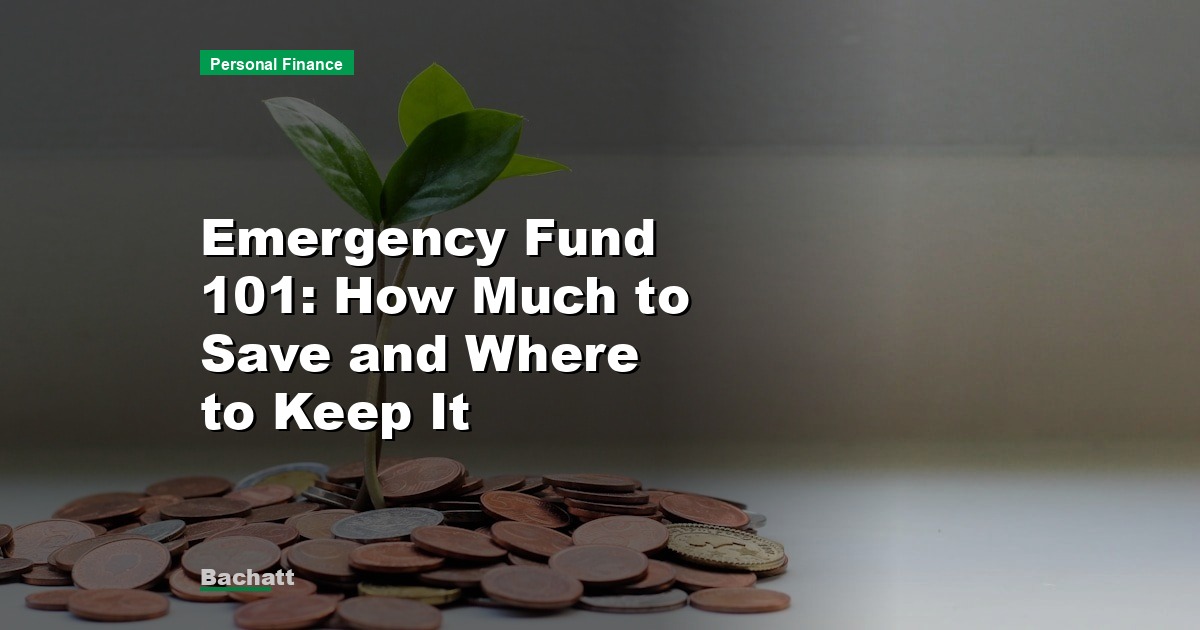
An emergency fund is the single most important financial tool you can build. It is more important than investments, more important than insurance claims, and more important than any get-rich-quick scheme. Let us understand exactly what it is, how much you need, and where to keep it.
What Is an Emergency Fund?
An emergency fund is money set aside specifically for unexpected events — job loss, medical emergencies, urgent home or vehicle repairs, or income disruptions. It is not for buying a new phone. It is not for a holiday. It is your financial airbag — you hope you never need it, but you will be grateful it is there when you do.
Why Self-Employed People Need a Bigger Emergency Fund
If you are salaried, most financial advisors recommend 3-6 months of expenses as an emergency fund. But if you are self-employed, you need significantly more — 6 to 12 months of essential living expenses. Here is why:
- Income can stop suddenly: A salaried person gets notice periods and severance. Your income can drop to zero overnight.
- No employer benefits: No paid sick leave, no employer-funded health insurance, no PF contributions.
- Business emergencies add up: You might face personal and business emergencies simultaneously — your shop floods and your child needs medical care at the same time.
- Seasonal fluctuations: Many self-employed people face predictable lean periods that an emergency fund can help cover.
How to Calculate Your Emergency Fund Target
Follow these steps:
- List all your essential monthly expenses — rent, food, utilities, school fees, insurance premiums, loan EMIs, basic transportation.
- Add them up. This is your monthly survival cost.
- Multiply by your target months (6-12 months).
Example: If your essential monthly expenses are Rs 25,000, your emergency fund target is Rs 1,50,000 to Rs 3,00,000. That might seem like a lot, but remember — you do not need to build it overnight.
How to Build Your Emergency Fund Step by Step
The biggest mistake people make is thinking they need to save the entire amount at once. Start small and be consistent:
- Month 1-3: Save Rs 1,000-2,000 per month. Just get started.
- Month 4-6: Increase to Rs 3,000-5,000 as you identify expenses you can cut.
- Good months: When income is higher than usual, put 50% of the extra into your emergency fund.
- Windfalls: Festival bonuses, unexpected payments, tax refunds — direct at least half to your emergency fund.
It might take 12-18 months to fully fund your emergency account. That is perfectly fine. Every rupee you save makes you more secure than you were yesterday.
Where to Keep Your Emergency Fund
Your emergency fund needs two qualities: safety and liquidity (the ability to access it quickly). Here are your best options in India:
1. High-Interest Savings Account
This is the simplest option. Many banks offer savings accounts with interest rates of 3-7% per year. Keep at least 1-2 months of expenses here for instant access. Look for accounts with no minimum balance requirements.
2. Liquid Mutual Funds
Liquid mutual funds invest in very short-term debt instruments and are considered very safe. Returns are typically 4-7% per year, better than most savings accounts. You can withdraw money and have it in your bank account within 24 hours. This is an excellent option for the bulk of your emergency fund.
3. Short-Term Fixed Deposits
You can ladder your emergency fund across multiple short-term FDs (3-month, 6-month, 1-year). This earns better interest than a savings account while keeping money relatively accessible. Just be aware of premature withdrawal penalties.
Where NOT to Keep Your Emergency Fund
- Stock market: Too volatile. Your Rs 2 lakh emergency fund could become Rs 1.4 lakh right when you need it.
- Real estate: Cannot be liquidated quickly.
- Long-term FDs: Penalties for early withdrawal defeat the purpose.
- Gold jewelry: Selling gold in an emergency means emotional and financial loss.
- At home in cash: Tempting to spend, earns no interest, risk of theft.
A Smart Structure for Your Emergency Fund
Consider splitting your emergency fund into three buckets:
- Instant Access (1 month of expenses): Keep in your savings account
- Quick Access (2-3 months): Keep in a liquid mutual fund
- Slightly Slower Access (3-6 months): Keep in short-term FDs or ultra-short duration funds
This structure balances the need for instant access with the desire to earn reasonable returns on your money.
When to Use Your Emergency Fund
Be strict about this. Your emergency fund is for genuine emergencies only:
- Medical emergencies not covered by insurance
- Income loss lasting more than one month
- Critical home or vehicle repairs
- Urgent business expenses that cannot be postponed
A sale at your favourite store is not an emergency. A friend’s wedding is not an emergency. A new phone is not an emergency.
Replenish After Using
If you dip into your emergency fund, make replenishing it your top financial priority. Reduce discretionary spending and redirect the savings until your fund is back to full strength.
Build Your Emergency Fund with Bachatt
Bachatt makes it easy for self-employed Indians to start saving — even with small amounts. Start building your financial safety net today. Download the Bachatt app and secure your tomorrow.